Western Seminary Softball

September 28th, 2011

We do the faculty-student softball games at our fall Western Seminary picnic here in Portland. This is Dave Wenzel’s “report” of the game. His humor will let you know how much fun we are having at Western these days.

Students Experience Matthew 22:13

clip_image002[6] “Then the Dean said to the Faculty-Staff softball team, Bind the students hand and foot and cast them into the outfield darkness; there shall be weeping and gnashing of teeth, and the Faculty-Staff will once again have bragging rights for another academic year.”

Portland Oregon (AP) An anonymous student prophesied that the Western Seminary Students would break the 7 year Faculty-Staff winning streak, and the FS demonstrated once again that the students are at best mediocre softball players, and at worst false prophets.

clip_image004[4] A major shake-up appeared to be in store for the legendary FS team earlier this year when Veteran team General Manager and player-coach Lynn Ruark retired, creating an opening in both the front office and at the helm of the FS softball team. Heir apparent to the head coaching job, John Branner left the state suddenly. Branner, interviewed prior to boarding his hurried flight out of the state, was quoted as saying “Not in a million-billion-trillion years would I try to fill Ruark’s shoes. Those red cleats he wears are just too shinny for me. I’m outa here!”

clip_image006[4]In a somewhat shady move suggesting late night back-room maneuvering Team President Randy Roberts and front office vice president Rob Wiggins were able to force Ruark out of retirement for at least one more season. Baseball Insiders at ESPN have hinted that the recent blockbuster “Moneyball” may be metaphorically about Lynn Ruark, instead of the Oakland Athletics General Manager Billy Bean as previously thought. Sources have reported that Brad Pitt was seen shadowing Ruark while preparing for the movie. The unconventional GM tactics that Ruark uses certainly match those portrayed by Pitt in the movie. Ruark reportedly pays the FS team shortstop in Cheetos (the puffy kind). While this type of payment violates amateur status and may be illegal according to the league rules, when asked about the Cheetos payment and the league rules violation Ruark responded, “League Rules? What league rules? I am the rules baby!” Meanwhile shortstop Dave Wenzel denied the Cheetos payment, but his fingers did look orange. Students were demanding a blood test.

While arguably producing a win-loss record untouched by any other seminary coach, Ruark is known for his brutal practice and training schedule. He unrelentingly demands that the FS show up once a year, two minutes before the game. Then Ruark utilizes the first two innings of the game to scout his team and have them practice. In the third inning he settles his line-up into place. His methods have psychologically traumatized the students over the years who are led to believe that the FS are actually playing in the first two innings, instead of just warming up and practicing. Hence, the students often get a false sense of superiority as they take a “lead” which is usually, like Saturday, obliterated by the fifth inning.

clip_image008[4] True to historical form the FS demonstrated their fairness and grace by letting the students take an early lead. After going down 1-2-3 in the first inning, the students exploded for 12 runs over the next four innings, lead mainly by fielding errors by FS pitcher Norm Thiesen. By the middle of the 5th the students were falsely complacent in their 12-7 lead, assuming that the aging FS team would fade in the demanding late innings of the game. Instead, lead by three homers from Matt Rookie, the FS came roaring back with 12 unanswered runs and ending up crushing the disheartened Students 19-12.

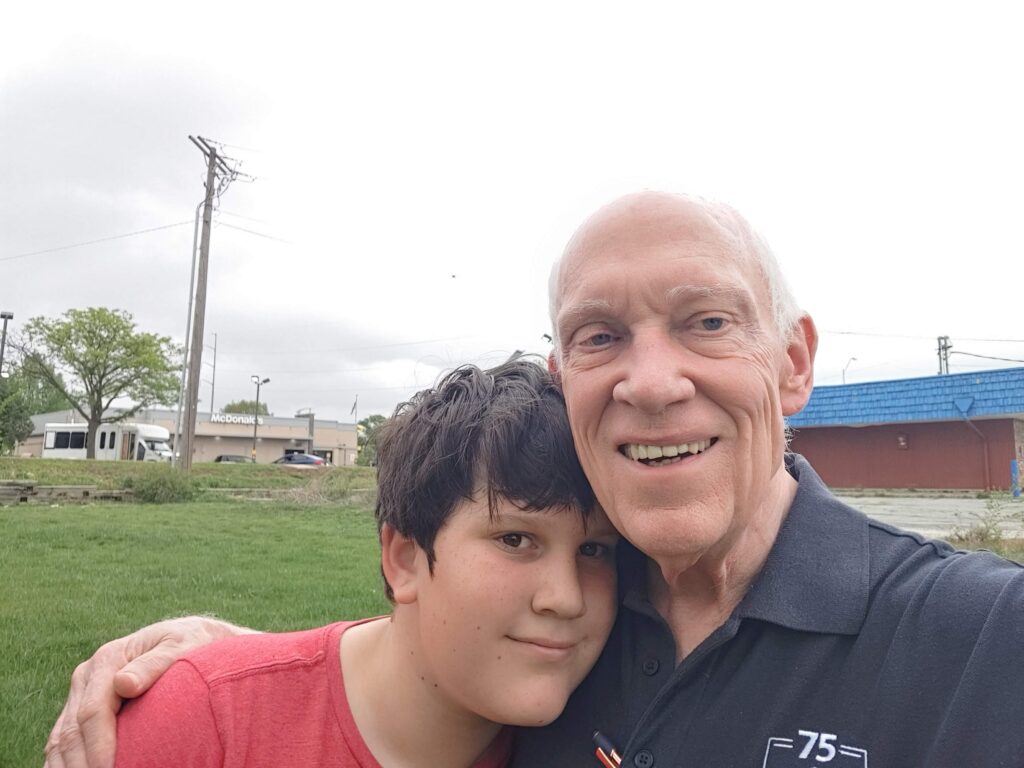
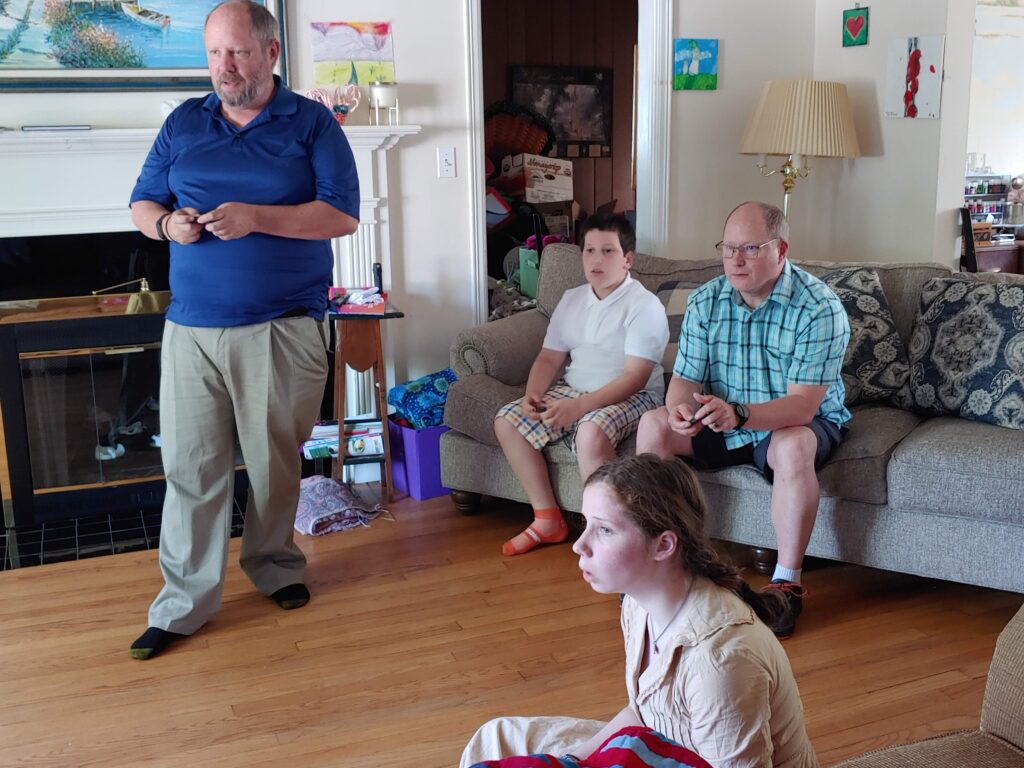
The FS team, with balding heads and an average age of about 73.2 years, simply overwhelmed the younger, less experienced, overly confident students. Despite his fielding miscues, Thiesen quieted the student bats providing 7 solid innings of pitching. Rock-solid infield play from Ruark, Ruark, Wenzel, Aidan’s dad, and Bruce assisted Thiesen, while Marc Cortez, Brian Leport, Aidan, Matthew and Michael chased down the fly balls in the outfield. Mark Baker lead the team on the field with his positive attitude and hustle from behind the plate.

The victory leaves the student team in disarray. A multi-year losing streak is virtually inexplicable given the age of the FS team. Additionally, the students involved in the false prophecy may face official sanctions from the School Administration for violating the code of conduct. Dan Bates has been accused of the false prophecy. Dean Marc Cortez has stated that he will assemble a special, closed-door committee, with both FS and Student representatives, to look into the possible conduct violation. In an initial inquiry into Bates academic records, there doesn’t exist any evidence that he has even taken classes. It could be that FS insiders have added insult to injury by purging the database of any evidence that he has ever been a student. At any rate, the students will face the humiliation of another year of silence in the face of the continued Faculty Staff dominance.

And you will want to remember that there might be other perspectives on these events.

Apocalyptic Sermons

September 17th, 2011

I preached the first of two apocalyptic sermons at Foothills Church in Stayton. It was on Matthew 24, done on the 10th anniversary of 9/11! Just before I left to preach the sermon, I read DA Carson’s New Bible Commentary which gave me a different and better perspective on 24:29-35. Now, mind you, this is in the final moments of getting everything into my head, days after the Power Point and sermon outline went in. And now a key interpretation changes!

Matthew 24 is Jesus answering the disciples questions: when will the Temple be destroyed and what will be the signs of Your coming? Jesus begins by telling them there will be many terrors — false messiahs, wars, hostilities, famines, earthquakes – but don’t give in to deception or fear for that sort of thing will typify the whole time. It is not the end of the age or the failure of Jesus (though it may be the failure of the religion, Christianity). In all these things, the gospel will be proclaimed and the kingdom will be real even if like yeast. Then He gives signs of the destruction of the Temple – the arrival of the abomination which turns out to be Titus. There are recognizable signs of this and Christians are warned to get out of town, which they did in 66 AD. Those are the days of terrible tribulation.

I thought verse 29 began speaking of the second question, the coming of Jesus with cosmic signs, leading up to “this generation will not pass away before all these things happen.” This is very difficult since Jesus did not come back in that generation. But Carson took me to what I have dedicated myself to: interpret NT symbols by how they are used in the OT. He observes that the language of sun darkening and stars falling comes from Isaiah 13 and 34. There it speaks of the fall of Babylon not the end of the times. The Son of Man language of v. 30 is from Daniel 7 where it is anointing of Messiah rather than the second coming of Messiah. Using that perspective means that the section from 29-35 is speaking to the change from God meeting humans at the Jerusalem Temple to the Him meeting us in One greater than the Temple, i.e., Jesus. The long promised New Covenant is inaugurated, Messiah is anointed King and Messiah, and the time of the Jerusalem Temple is ended. The language uses powerful images from the OT to help us see that change which is typified by the destruction of the Temple is “cosmic”!

That means the generation of verse 34 is the people listening to Him as He speaks the prophecy. It is about the time of the destruction of the Temple. There are signs of that event which actually comes less than 35 years later, just as Jesus said.

Verse 36 begins speaking of the second coming, referred to specifically as the parousia in verse 37. Unlike the destruction of the Temple, there are no signs of that event. Even Jesus, in His incarnate state where He has laid aside the use of His divine powers to live as a perfectly Spirit filled human, does not know. It is like a thief in the night. We are ready not because we have some magic decoder ring to predict the date, but because we are doing the consistent work of living and declaring the reality of the kingdom.

The second is on the whole book of Revelation in a single sermon. A bit of a task.

Bell on Hell

June 17th, 2011

When Rob Bell speaks you have to listen. He is so compelling, so likeable, so confident. He has a contagious love for Jesus. He uses images, and metaphors, and ideas with incredible dexterity. So when he poetically probes questions about hell, we question too. He rightly wonders about people who feel they must declare proudly and noisily that Gandhi is in hell. He does a great job of deconstructing the hellfire and brimstone people, ones who see God getting glory out of people burning in hell. There are frustratingly many of these, though it’s much less common in the evangelicals associated with Western Seminary or the churches I minister in.

He outlines his view: At the end of the age, God’s love overcomes every objection and everyone comes to know and accept Jesus. This is not the “all roads lead to God” type of universalism, but a Christian universalism with salvation only through the name of Jesus. He cites passages like Philippians 2:10 and Colossians 1:20.

Bell centers on the deep deep love of God. Ironically this is one of his weaker spots. When he insists, “love wins,” he makes God more like the dominating husband demanding his own way than the triune God of the Bible, the God who will let you choose, the one who will let you love someone else. The God of the Bible is something like a jilted husband, grieving for His lost covenant partner. Bell’s God largely does a pass on the anger that love raises up when confronted with persistent sin and evil, the God who is like an outraged father whose daughter has been abused. Forgiveness and reconciliation come only at great expense and are easily derailed through one party’s resistance.

He asks a good question: Does God want all to be saved? My answer is absolutely. The God who seeks Adam and Eve out after their sin seeks everyone. John 3:16, 1 Timothy 2:4, 2 Peter 3:9 are very clear. Then he asks does God get what he wants? My synthesis of the biblical data says He does not. God draws (John 12:32), convicts (John 16:8-11) and leads (Rom. 2:4-11) every human being toward His kindness. Anyone who responds to this drawing will find a God who initiates in grace, eager to reveal Messiah Jesus through various means. Those who like Jesus and want to be like Him and with Him doing the cool things He likes to do will be there and do that forever.

But He also allows the many of the ones He draws to persist in their demand to run their own lives as they see fit — often for very bad reasons — and reject His love. if you don’t like doing the things Jesus does, then you get to live in a place we call hell. Bell correctly says that there are many Middle Ages pictures of hell that are very non-biblical and shreds them. But he also shreds the fact of the self centeredness that makes people reject the self-giving way of Jesus. He shreds the biblical concept of sin, which Luther termed curvatus in se, bent in on self. This means separation from God for all and punishment for evil doers.

I believe there are different levels of hell. Matt. 11:20ff is one place this is clear. So for many, hell is the place of ultimate selfishness after God gives them over (Rom. 1:24ff) to their own desires, an ultimately self-centered place they think they want. But that’s a very alone existence, completely absent of the self-giving love of God. For evildoers, especially those guilty of spiritual evil, that will be a place of terrible punishment. It will be existence – not living – under His curse, in the eternal fire prepared for the devil and his angels. (Mat 25:41)

What really hacks me is that Bell actually changes the very text of Scripture to fit his view (Matt 25:46; details below for those who want specifics). He does it without any justification or even telling us that he’s doing it. And then he accuses people who follow the text of reading foreign concepts into the text. Astounding. Absolutely astounding. And completely unacceptable.

The other big scale issue is that he has virtually no gospel left. As he deconstructs the whacked gospel of the hell fire and brimstone preachers, he makes the Bible seem as if there’s just total confusion and then never says what Jesus’ provision is nor what our response should be. His discussion bypasses the whole issue of sin and stays quite vague about what Jesus accomplished on the Cross. Not good.

Finally he begins his book with Gandhi because most people think him a super good guy and therefore must be headed to heaven. Anyone who says he’s in hell obviously is a bigoted fundamentalist. But Gandhi investigated Jesus and rejected Him, choosing to be a Hindu and worship the Hindu gods. His form of non-violence led to a civil war in which vast numbers were injured and killed. The division and hatred continue to this day. Now contrast Gandhi with Dr. Martin Luther King, Jr. Dr. King investigated Jesus and embraced Him. His revolution was largely blood free and the reconciliation which he initiated, though incomplete, continues to this day.

What should we do with hell? Denying it’s existence is like denying that I have cancer. I appreciate Mark Driscoll’s sermon on Luke 16. I resonate deeply with his tears at the thought of people going to hell and his passion to spread the old old story of Jesus and His love given freely so they can find life. Then it will be true that LOVE WINS.

The best review of Love Wins is by Ben Witherington of Asbury Seminary does a chapter by chapter review. The links are here:

There is a chronology of written and video reviews on Resurgence.com

I particularly like John Mark Reynolds of the Torrey Honors Institute: here: .

Now some details: According to every English translation of Matthew 25:46 – Jewish , Catholic, mainline, and evangelical – Jesus says that goats go into eternal punishment. Anyone who goes against every single translation has to give really good reason for it. Let’s take a look. In Greek the words are aionion kolasis. No matter what lexicon you select, the only translation is “eternal punishment” or words with the same meaning. But Bell changes the text to aion kolazo. Rather than an adjective modifying a noun, it’s two nouns which really makes no sense. He has to add “of” to make it work. Why does he do that? There are no textual variants, no manuscript evidence, no scholarly questions behind the change; just Bell’s chutzpah that wants to update Jesus. What’s the significance? If you look up the changed words in Bauer, Denker, Arndt & Gingrich, the standard Bible era lexicon, the meaning will still be “eternal punishment.” But if we go to Liddell & Scott, the standard lexicon of classic Greek, the language of philosophers like Plato and Aristotle from some 400 years prior to the biblical era, you can find a rare meaning, “prune.” So Bell constructs the meaning “a period of pruning.” But if the word modifying punishment (or pruning) is for a period of time that ends, then it has to have the same meaning when it modifies life. Does Bell really believe our life with God comes to an end after a while? The big offense here is that he never mentions the fact that he changes the biblical words. And then he accuses people who follow the Jesus’ words of reading categories and concepts into the phrase that aren’t there.

Crisis Communication Tips

May 26th, 2011

1. Speed is key. Lasting perceptions are set in the first 24-48 hours.

2. People are self-interested. They want to know how the company is acting to protect them from risk; this includes disclosure of the risks.

3. People are not rational. Facts don’t dominate perceptions, emotions do. Facts are necessary, but not sufficient, when resolving a crisis.

4. Communications without concern will fall on deaf ears. Recognize and acknowledge the human dimension of the problem. Defending company honor is not the first priority in the midst of a crisis.

5. Credible third parties can be your best allies.

6. People know zero-risk is a myth. Still, they want options and controls available to them, and they need information to make risk-benefit judgments.

7. Every action elicits a reaction. Constant monitoring of the situation is essential to keeping control.

8. The symbolism of a company leader being involved and appearing in control is critical to successful crisis communications.

9. Clear, positive, decisive actions are required to convince audiences that the company is responsive and in control.

10. Consistent communications are important. Determine your position and stick to it. If you must change your position, be prepared to explain why.

This is from Waggner Edstrom, an influential PR Company

Cinco de Mayo

May 6th, 2011

The overwhelmingly busy ends today with grades due. There’s still a ton of school stuff to do with papers starting to come in from the summer intensive for which then in class portion was done last week. But my most demanding activity has been church consulting.  In particular, I’ve been mediating in a conflict between leadership in a local church. It ended up with one elder being asked to step down. It exploded when the letter was read to the church last Sunday. There is so much that I can’t say here (obviously), but my week has been consumed in working with the leaders, many parishioners who came to me after they saw my name on the letter and much prayer. When trust is broken, everything is read with suspicion and even the most honest statements are read with an eye to hidden messages. It is virtually impossible to restore those relationships. The hurt is vast on all sides. The only real hope is if the major parties can get into a situation where sin can be confessed, where pain can be shared, where love can be expressed, where vulnerability can happen, and where the Holy Spirit can work the reconciliation that Jesus came to die and rise for. Please join me in praying for these good people and for other relationships where the pain is still too great for any connection to happen.

Rob Bell’s Hell

April 2nd, 2011

Like everyone else in the theological world, I’m following Rob Bell’s Love Wins. He has managed to stir up controversy in an amazing way. I’ve read a bunch of reviews including the ones that everyone sees: Kevin DeYoung, Tim Challies, Mark Galli, and others. You can find them all linked from the Resurgence site (here). I also like the one by JohnMark Reynolds from the Torrey Honors Program at Biola (here). Ben Witherington is doing a long, thoughtful chapter by chapter review (starts here).

Read the rest of this entry »

Knee and Tsunami

March 24th, 2011

Sherry and I celebrated our 43rd anniversary in very subdued way. We’d planned a trip to Bend to hang out for a time for just us, but that all fell through. Sherry was just in her second day home from the hospital following her second knee replacement. We thought we’d have at least six weeks notice, but there was a cancellation so we took it. That meant a quick change of schedule and arranging for the surgery. We wondered if their surgical gowns would be green since it was St. Patrick’s Day. But all was ordinary. Surgery went well and the pain management was excellent so Sherry came home in good spirits, though the expectation of many weeks of painful recovery is never a good prospect. She has her first physical therapy appointment today and we are looking forward to getting her bruising assessed. There’s a lot more this time and it concerns us.

I had cataract surgery a couple of weeks before Sherry’s surgery. They poked a hole in my cornea, blasted the old cloudy lens with ultrasound, sucked it out, put in a new carefully built plastic lens, smoothed everything out and were done in 8 minutes. Amazing. Now I see very clearly, so much so that I can see the ‘”brown tone” in my other eye which also has a cataract, the doctor says.

Only a few years ago neither of these could have happened and in much of the world they still can’t happen. I just don’t know what to make of that. The advances in health care are astounding but very expensive so it goes with riches. the problems with justice plague my mind, but I have no idea what do about it.

The Japanese earthquake and tsunami also hit close to home. My friend Shigeru and Atsuko Suzuki live there as does the family of one of Donn and Susan’s foreign exchange students. I’ve read John Piper saying the decisive cause is the hand of God (article here) and incline to David Bentley Hart saying this is the work of the enemy whom Jesus came to destroy (article here). In his book, Suffering and the Sovereignty of God, Piper says “the ultimate reason that suffering exists in the universe is so that Christ might display the greatness of the glory of the grace of God by suffering in himself to overcome our suffering. The suffering of the utterly innocent and infinitely holy Son of God in the place of utterly undeserving sinners to bring us to everlasting joy is the great display of the glory of God’s grace that ever was, or ever could be.” I fully agree that the eternal Son of God entered into our suffering, taking its worst to display the glory of His grace and bring us His joy. But I can’t see in Bible that being the reason for suffering. The statement in Bible is that He came to condemn the prince of this world (John 12:31; 14:30; 16:11), to destroy the last enemy, death (1 Cor. 15:26; 54-56). I’m more with Hart, believing “For while Christ takes the suffering of his creatures up into his own, it is not because he or they had need of suffering, but because he would not abandon his creatures to the grave. And while we know that the victory over evil and death has been won, we know also that it is a victory yet to come, and that creation therefore, as Paul says, groans in expectation of the glory that will one day be revealed. Until then, the world remains a place of struggle between light and darkness, truth and falsehood, life and death; and, in such a world, our portion is charity.” On that point we all agree: Evil is evil and the Christian response is to help. 

Sexual Behavior in America

March 7th, 2011

A new report just came out from the Centers for Disease Control (Report here) and once again confirms the biblical view of sexuality. Russ Douthat has a summary in his NY Times op ed here. Most important is that people who follow a biblical view of sexuality are the most happy folk. Douthat says that another study confirms this:

. . . two sociologists, Mark Regnerus and Jeremy Uecker, in their recent book, “Premarital Sex in America.” Their research, which looks at sexual behavior among contemporary young adults, finds a significant correlation between sexual restraint and emotional well-being, between monogamy and happiness — and between promiscuity and depression.

This correlation is much stronger for women than for men. Female emotional well-being seems to be tightly bound to sexual stability — which may help explain why overall female happiness has actually drifted downward since the sexual revolution.

Among the young people Regnerus and Uecker studied, the happiest women were those with a current sexual partner and only one or two partners in their lifetime. Virgins were almost as happy, though not quite, and then a young woman’s likelihood of depression rose steadily as her number of partners climbed and the present stability of her sex life diminished.

The point isn’t that we should aspire to some Arcadia of perfect chastity. Rather, it’s that a high sexual ideal can shape how quickly and casually people pair off, even when they aren’t living up to its exacting demands. The ultimate goal is a sexual culture that makes it easier for young people to achieve romantic happiness — by encouraging them to wait a little longer, choose more carefully and judge their sex lives against a strong moral standard.

The other thing from the study is that American sexual behavior is actually improving: In 2002 22 percent of Americans ages 15-24 were virgin. But in 2008 that number rose to 28%. That’s still a depressingly small number, but it is an encouraging direction.

So the church has a lot of work to do.

Western Update February 2011

February 21st, 2011

I am writing this at the Justice Conference in Bend, OR (http://thejusticeconference.com) manning the Western booth and going to amazing sessions highlighted by Dr. Nicholas Wolterstorff, author of Justice: Rights and Wrongs. The sessions have provoked me to ask:

  • Is it loving to give bread to a starving child? Of course, we respond. Is it loving for a Nazi SS guard to give bread to a starving Jewish child in Auschwitz? The picture changes dramatically in this context.
  • We cry: “God, why don’t you do something??” God replies: “I did. I made you. Get out there and do something.”
  • How can you worship a homeless man on Sunday and ignore one on Monday?
  • The more stuff we have, the more clubs we need.
  • Love is something more stern and splendid that mere kindness (C.S. Lewis)
  • I was watching gripping pictures of Congolese widows and orphans and realized I can’t distinguish a big laugh from a piercing scream.

I have been thinking about righteousness (tsedek) and justice (mishpat) and what it looks like in Gospel perspective for a long time. My short summary these days:

a. Righteousness (tsedek) means life with all relationships – God, humans, self, and land – well ordered and harmonious so that life is full of shalom, all things flourishing as God designed them to be. The righteous person – God or human – is one who contributes to such life because he is characterized by chesed, loyalty, faithfulness, grace and ‘emet, reliability truth, integrity.

b. Doing justice (mishpat) is inconveniencing yourself for the sake of righteousness, especially for the "worthless person" while injustice is keeping my stuff for my own comfort.

c. The reason for doing justice: loving and being like the LORD. It is being like the LORD who gives Himself in creation and redemption.

You’ll want to work through Tim Keller’s Generous Justice to get a pastoral perspective on this vital issue.

Doctrine was published a year ago. I am very pleased to find that it has really touched into a need. Many pastors have found it is excellent for getting people, elders, small group leaders and new believers, grounded in the basics of what Christians should believe. Mark Driscoll told me that they are starting to develop a children’s curriculum based on this book. I’m excited!

Some forthcoming books:

John Bishop, Dangerous Church: Jesus said, "I will build my church, and the gates of Hades will not overcome it." John and the people at Living Hope Church understand that Jesus meant the church, not our enemy, is what is truly dangerous, really on the offense, the one that is overcoming. As you read Dangerous Church you’ll see the compelling story of a church that risks everything for God to enjoy the thrill of joining Jesus on mission. Because I walked with them through much of the journey, I can say the story is literally awesome. Only God!

Tim Challies, The Next Story: His perspective on the impact of the digital age made me question: If I outsource memory is it an advance or a loss? Where is wisdom in the immediacy of the information explosion? Can we really affirm biblical authority when Wikipedia is truth? He uses theoretical, experiential and theological lenses to give us a prophetic assessment of our digital age. He unpacks the opportunities of increased connection as well as the new Gnosticism of the dis-incarnations of the virtual society. He calls us to extricate ourselves from the ADHD world of information overload to live as whole persons giving ourselves to wisdom and worship of God alone.

Lynn Ruark has been served Western as Dean of Students and Financial Aid Director for 35 years. He will be retiring this summer. In case you want to express appreciation, his email is lruark@westernseminary.edu.

On a personal note: Sherry’s first knee operation was a success. She is on track for knee #2 this summer. I am glad to say so far as I know no one on our faculty or staff are facing significant medical or personal crises.

Finally: a good number of you opted in to receive my ongoing series of short biblical theological pastoral papers on topics. The first one was on divorce and re-marriage. I will be sending out one on spiritual gifts in the next few days. If you would like to join me in thinking through such issues, shoot a reply back to me and I’ll include you on the list. Being in the list does not obligate you to respond or interact, I hasten to say.

Evangelism Events

January 18th, 2011

We had a great time at the Live Nativity at Living Hope Church in Vancouver. You can get a introduction in this YouTube video: They did 13 services, packing the building each time. Attendance totaled 14,000 .  Close to 1800 made decisions for Jesus, John Bishop, the pastor and my friend, reported. It highlighted Curley the Camel, (pictures here), Danny the donkey, three selfish goats, sheep, a cow, Mary, Joseph, baby Jesus (yes, live), shepherds, wise men and all the rest.

When I hear of this level of response to accept Jesus, I’m a bit suspicious. I do hail from Missouri, after all. We were there Thursday night, the night before Christmas Eve. The place was packed before the 7 pm start time. The show was amazing even if Danny the Donkey kept kicking the floor, much to John’s frustration (turned out he just wanted some attention). The close came to think of the nails that would pierce the baby’s hands and John gave the invitation to pray with him. I wondered what would happen. I was astounded to hear many voices around me praying the prayer aloud along with John.  I looked and there was quite a variety of people, young and old, traditional and hip. They were encouraged to stop by the welcome table and pick up a special Bible with a “what’s next” packet. There were people all over who were ready to talk with those who prayed.

Sherry and Cyndee needed to stop by the restroom, so I was standing beside the wall of the food court (Living Hope met in Vancouver Mall, by the way). As I was watching people, I noticed a twenty something woman nearby. When I looked back a bit later, I noticed that she was pulling something out of her bag. It was one of the Living Hope Bibles. So I went over to her and asked if she’d been at the service. The smile erupted, “O, wasn’t it wonderful!” I asked about the Bible and if she’d come in contact with Jesus. Her smile grew bigger. “No, I did that last year,” she laughed. “I got the Bible for my Dad. He’s the most stubborn man in the world and he’s there right now trying to figure out if he can receive Jesus!” As we talked her boyfriend came out. He came from a strong Christian home but her home had no religion of any kind. We talked of her conversion in the 2009 Nativity service and her deep desire that her Dad would come in. I asked if we could pray and they were delighted. So I prayed for the stubborn Dad as I expressed my joy for the change in her life. I didn’t pray for my skepticism, but probably I should have.